10 Expert Tips to Make Your Small Space Look Twice as Big
Living in a small home or apartment doesn’t mean you have to sacrifice style or comfort.Actually, some of the most creative and uniquely tailored interiors appear in small, cozy spaces.The secret is in leveraging visual perception—using color, lighting, furniture, and layout to create the illusion of more space than is really there.
1. Light Colors Open Up Your Space
Light, soft hues such as whites, light grays, pale blues, and gentle beiges reflect natural and artificial light, making walls appear to recede and rooms feel more expansive. Dark colors, while rich and cozy, tend to absorb light and can make a room feel enclosed.
But going light doesn’t mean your space has to be boring. Introduce variation through texture: a nubby wool rug, smooth matte walls, linen curtains, or velvet cushions can add depth and interest without overwhelming the senses. If you love color, consider an accent wall in a muted tone, or bring in personality through artwork, plants, and decorative objects.
Pro Tip:
For a truly seamless look, paint your ceilings, walls, trim, and even radiators the same light color. This eliminates visual breaks and makes the ceiling feel higher. Eggshell or satin finishes bounce more light than matte surfaces, making a space feel brighter.
2. Maximize Every Ray of Natural Light
Start by treating your windows wisely. Heavy, lined drapes can make a window feel smaller. Instead, opt for minimalist solutions:
-Sheer Curtains: Filter light beautifully while maintaining privacy during the day.
-Roman Shades: Offer clean lines and can be pulled up completely to expose the full window.
-Inside-Mount Blinds or Shades: Sit within the window frame for a neat, built-in look.
If your view isn’t ideal or you need more privacy, frosted window film is a fantastic solution. It lets in soft, diffused light while obscuring the view inside and out.
For rooms with no windows, get creative:
Position a sizable mirror directly across from your main light source.
Use LED tape lights under cabinets or shelves to wash walls with light.
Pick lamps with shades that cast light upward, allowing it to bounce off the ceiling.
3. Create the Illusion of Height
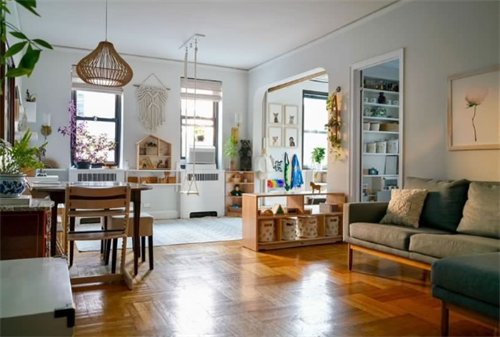
Low ceilings can feel restrictive, but you can make them appear taller with these techniques:
-Vertical Stripes: Applied through wallpaper, paint, or paneling, vertical lines guide the eye upward.
-High-Hung Curtains: Install the curtain rod 4-6 inches below the ceiling—or even right at the ceiling—and let curtains hang to the floor. This creates a long, elegant vertical line.
-Low-Slung Furniture: Choose sofas, beds, and tables with lower profiles. The more space between the top of your furniture and the ceiling, the higher the ceiling will feel.
-Vertical Storage: Tall, slim bookcases or built-in cabinets that reach the ceiling emphasize height and provide valuable storage without eating up floor space.
4. Choose Lightweight and leggy Furniture
Furniture with open or transparent designs creates a sense of more space in a room.This is known as “visual weight.” Avoid bulky, solid pieces that look heavy and block light.
-Look for Legs: Sofas, chairs, and tables with raised legs allow light to pass underneath, making the floor space appear continuous.
-Transparent Materials: Acrylic chairs, glass coffee tables, or lucite shelves seem to take up no visual space at all.
-Open Bases: Choose side tables and consoles with open shelving or wire frames instead of solid sides.
A great example is swapping a large, solid entertainment center for a slim, wall-mounted media console with open shelving.
5. Go Vertical with Storage
When you can’t build out, build up. Making use of vertical wall space can completely transform a small living area.
-Floating Shelves: These are incredibly versatile. Use them in the kitchen for spices and cups, in the living room for books and decor, or in the bathroom for towels and toiletries.
-Wall-Mounted Desks: A fold-down desk can transform a nook into a home office, then disappear when not in use.
-Over-the-Door Organizers: Don’t forget the back of doors! They are perfect for shoes, cleaning supplies, or pantry items.
-Tall, Narrow Units: A floor-to-ceiling shelving unit in a hallway or beside a doorway provides maximum storage with a minimal footprint.
6. Multi-Functional Furniture Is Your Best Friend
-Storage Ottomans: Can be a coffee table, extra seating, and a place to stash blankets.
-Sofa Beds: Essential for hosting overnight guests without dedicating a whole room to a guest bed.
-Extendable Dining Tables: Perfect for those who occasionally entertain but need a small table for daily use.
-Nesting Tables: A set of two or three compact tables that can be grouped together or separated as needed.
Think about your lifestyle and choose pieces that adapt to your needs.
7. Embrace Modular and Customizable Systems
Modular furniture systems, like those from IKEA or other ready-to-assemble brands, are perfect for small spaces because they can be tailored to fit exact dimensions and reconfigured as your needs change.
-Cube Shelves: Can be arranged horizontally or vertically, used as a room divider, or even built into a window seat.
-Modular Sofas: Sectionals that can be rearranged or split into separate chairs offer incredible flexibility.
-Wire Grid Panels: Systems like the IKEA SKÅDIS can be mounted on walls and customized with hooks, shelves, and containers for endless storage solutions.
8. Leave Some Breathing Room (The Power of Negative Space)
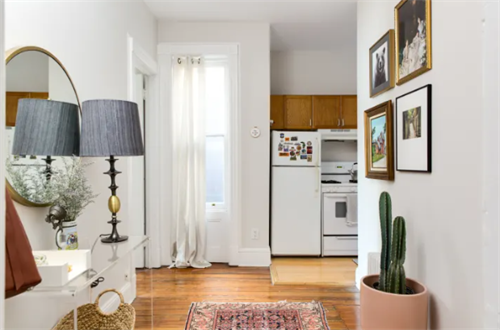
It’s tempting to push all your furniture against the walls to maximize floor space, but this can actually make a room feel like a crowded waiting room. Moving furniture slightly away from the walls—even just a few inches—enhances the flow and makes the room appear more spacious.
Create intentional pathways that are easy to walk through.
Keep surfaces uncluttered—allow for some open space on shelves and tables.
In the bedroom, if possible, leave a little space on either side of the bed instead of shoving it into a corner.
This open space gives the room a deliberate, thoughtfully arranged feel instead of a cramped one.
9. Use Sliding or Pocket Doors
A conventional swinging door can take up more floor space than you might expect.Where possible, replace them with space-saving alternatives:
-Sliding Barn Doors: Popular and stylish, they glide along a track mounted on the wall.
-Pocket Doors: Slide directly into the wall cavity—the ultimate space-saver, though they require more involved installation.
-Folding Doors: Often used for closets or room dividers, they compress to the side when open.
This is especially useful for pantries, laundry closets, or bathrooms where every inch counts.
10. Reflect Light and Views with Mirrors
This classic trick works because it’s so effective. 4. Mirrors don’t just bounce light—they reflect the whole room, creating the illusion of twice the space.
-Thoughtful Placement: Place a large mirror across from a window to bounce in outdoor views and enhance natural light. In a hallway, a mirror at the far end can make the space feel much longer.
-Go Bigger: One large mirror is often more effective than several small ones, as it creates a clearer, less fragmented reflection.
-Style as Art: An ornate gilt mirror can become a stunning focal point, while a simple leaner mirror adds a modern, casual vibe.
Don’t be afraid to use mirrors in unexpected places, like on closet doors or above a fireplace.
Putting It All Together: A Cohesive Small-Space Strategy
The most successful small spaces combine several of these strategies. For example, a studio apartment might feature:
A light, neutral color palette throughout.
A large mirror opposite the only window.
A sofa featuring a low silhouette and slender, elevated legs.
A modular shelving unit that acts as a room divider between the sleeping and living areas.
Hang curtains from ceiling to floor around the bed nook to establish a cozy, defined space.
The goal is to create a home that feels open, organized, and uniquely personal. The focus isn’t on concealing a small space, but on embracing its efficiency and comfort while removing any sense of clutter or confinement.
RELATED GUIDES

How to sharpen kitchen knives at home?
At the center of every kitchen is a set of knives—tools we use every single day, whether for slicing vegetables, filleting fish, or carving a Sunday roast.
Marble vs. Quartz Countertops: The Ultimate Guide for Your Kitchen Remodel
Hey there, home renovators and kitchen lovers!Let’s talk about one of the biggest decisions you’ll make during a kitchen remodel: the countertops.
How to Maintain Solid Wood Furniture?
Solid wood furniture embodies a unique blend of natural beauty, warmth, and timeless craftsmanship. However, like any living material, wood responds to its environment.
The Ultimate Guide to Picking Fabrics for Your Home: Make Your Space Comfy & Stylish
Whether it's curtains, couch covers, or throw pillows, the fabrics you pick can totally change how a room feels.